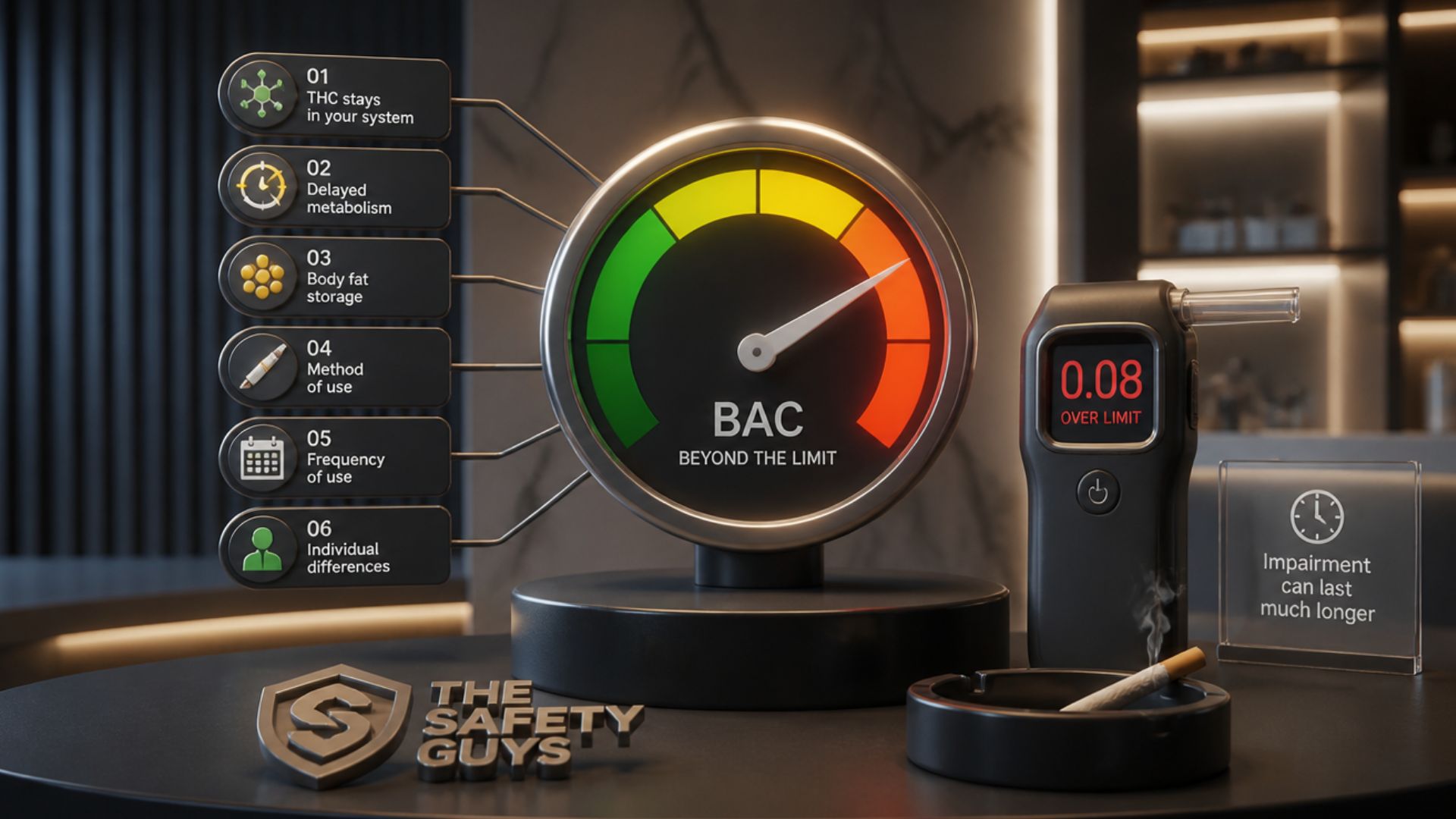
6 Reasons You Could Still Be Over the Limit After a Night of Smoking
Published by Drug Driving Solicitors, specialist UK solicitors defending drivers facing drug driving charges.
Cannabis can create a particularly difficult problem for drivers the morning after use. Once the noticeable effects have disappeared, it is easy to assume that the drug is no longer relevant. However, feeling sober and having a blood THC concentration below the legal driving limit are not necessarily the same thing.
Under Section 5A of the Road Traffic Act 1988, a driver can commit an offence by driving, attempting to drive, or being in charge of a vehicle with a specified controlled drug above its prescribed concentration. In England and Wales, the specified limit for delta-9-tetrahydrocannabinol, or THC, is 2 micrograms per litre of blood. The threshold for illegal drugs was intentionally set very low, while remaining above levels that could arise through accidental exposure.
1. Frequent Cannabis Use Can Extend the Detection Window
Regular Use Can Leave Residual THC
How frequently a person uses cannabis can significantly affect how long THC remains measurable. Someone who uses cannabis occasionally may have a very different elimination pattern from somebody who uses it every day or several times a week.
THC is highly fat-soluble, and repeated exposure can result in cannabinoids accumulating within body tissues. Research involving chronic cannabis users has demonstrated measurable THC in blood well beyond the period of acute intoxication. In one controlled abstinence study, some frequent users continued to have detectable blood THC after six full days without cannabis.
The Previous Night May Not Be the Whole Story
For a frequent user, therefore, a morning blood result may not reflect only the cannabis smoked the night before. Residual THC from a longer pattern of consumption can contribute to concentrations that remain in the bloodstream.
Studies involving chronic frequent users illustrate just how variable this can be. Research has identified THC persisting for days under monitored abstinence, with some participants retaining substantial concentrations considerably longer than might be expected from the duration of their subjective high. This is one reason simple statements such as “12 hours is enough” cannot be treated as reliable rules for every driver.
2. Feeling Sober Does Not Tell You Your Blood THC Level
The Subjective High Can Fade Before THC Has Cleared
People naturally judge cannabis use partly by how they feel. If the altered perception, relaxation, drowsiness, or other noticeable effects have passed, they may conclude that the drug is no longer affecting them in any legally relevant way.
That assumption can be misleading. The presence and concentration of THC in blood do not correspond perfectly with someone's subjective impression of intoxication. This becomes particularly important when the legal issue is whether a specified blood concentration has been exceeded rather than whether the person considers themselves high.
Section 5A Does Not Depend on Obvious Bad Driving
The Section 5A offence is distinct from the separate offence of driving while unfit through drugs. Under the specified-limit regime, it is possible for the prosecution to rely on the concentration of a listed drug without needing to establish that cannabis caused weaving, delayed reactions, poor judgement, or another obvious sign of impaired driving. Government guidance expressly notes that it can be illegal to drive with certain levels of illegal drugs in the blood even where they have not affected the person's driving.
For this reason, waking up feeling alert, eating breakfast, showering, or otherwise feeling entirely normal cannot establish that a person's THC concentration is below the statutory limit. Subjective sobriety may be reassuring from the driver's perspective, but it is not a blood test.
3. THC Is Stored and Released Differently From Alcohol
THC Is Highly Fat-Soluble
Cannabis cannot simply be treated as though it clears from the body according to the same kind of timetable people commonly associate with alcohol. THC is highly lipid-soluble, meaning that after entering the circulation it is readily distributed into fatty tissues and other parts of the body.
With repeated cannabis exposure, cannabinoids can accumulate in adipose tissue. THC and related compounds may subsequently be released and redistributed over time. Pharmacokinetic research therefore describes a more complicated pattern than a simple hourly countdown from the moment cannabis was last consumed.
Clearance Is Not a Straight-Line Calculation
Blood THC levels generally fall substantially after the initial peak, but the body's handling of THC includes distribution into tissues, metabolism in the liver, and later elimination. Residual concentrations may therefore remain after the immediate intoxicating effects have passed.
This makes alcohol-style calculations unreliable for cannabis. A driver cannot safely assume that a fixed number of hours automatically removes a predictable amount of THC from the bloodstream. The relationship between dose, elapsed time, patterns of previous use, and the eventual blood result is considerably more complicated.
4. Your Metabolism and Body Composition Can Change the Picture
Cannabis Does Not Clear at an Identical Rate in Everyone
Two people can consume a similar cannabis product at approximately the same time and still experience different concentration profiles. Differences in metabolism, body composition, frequency of cannabis use, dose, food intake, and the way the product was consumed can all influence cannabinoid pharmacokinetics.
THC is metabolised primarily in the liver and distributed extensively through the body, including into adipose tissue. Pharmacokinetic reviews indicate that distribution can be affected by factors such as body size and composition, while metabolism itself varies between individuals.
Hydration Is Not a Reliable Shortcut
Drivers sometimes assume that drinking substantial amounts of water, exercising, sleeping, or eating will make THC disappear rapidly. None of these provides a dependable method of calculating whether a person's blood concentration has fallen below the statutory threshold.
Hydration is particularly easy to misunderstand. Although staying hydrated is sensible generally, drinking water does not provide a reliable way of removing THC from blood on demand. Because THC distribution and elimination involve metabolism and tissue storage rather than simply flushing a water-soluble substance from the body, there is no practical home technique that can confirm a driver is below the limit.
5. Edibles and Other Consumption Methods Alter the Timing
Inhaled and Oral Cannabis Behave Differently
The route by which cannabis enters the body matters. Smoking or vaping delivers THC through the lungs, producing relatively rapid absorption and early blood concentration peaks. Oral cannabis follows a different pathway because the product first passes through the digestive system.
Research on oral cannabis consistently reports delayed and highly variable absorption compared with inhalation. Studies have found that edible cannabis can produce later peak effects and a substantially different pharmacokinetic profile from smoked or vaporised cannabis.
Delayed Peaks Make Timing Harder to Judge
This can complicate the assumption that the clock simply starts when the cannabis was first taken. Someone who consumes an edible late in the evening may still be absorbing and metabolising THC considerably later than someone who smoked cannabis at the same time.
Products also differ in dose and formulation, making broad waiting-time estimates even less dependable. Although the article's title refers to smoking, drivers who use oils, capsules, gummies, baked products, or other oral preparations should be particularly cautious about transferring assumptions based on smoked cannabis to those products.
6. The Legal Threshold Is Not a Severe-Impairment Threshold
The THC Limit Is Intentionally Very Low
One of the most important misconceptions concerns what the legal cannabis threshold represents. In England and Wales, the specified Section 5A blood limit for delta-9-THC is 2 micrograms per litre. Government material describes the limits adopted for illegal drugs as extremely low and designed to rule out accidental exposure rather than as concentrations representing severe intoxication.
It is therefore more accurate to describe the policy as a very low or near-zero-tolerance approach rather than saying that the legal concentration is literally zero. A measurable statutory threshold exists, but it is deliberately stringent.
You Do Not Have to Look Heavily Intoxicated
This distinction has major practical consequences. A driver does not need to be stumbling, confused, visibly high, or driving erratically before a Section 5A allegation can arise. The specified-limit offence concerns the concentration found in the relevant evidential specimen.
That helps explain why the morning after cannabis use can still create legal exposure. The sensations associated with being high may have disappeared long before the legal question has been resolved. When the statutory threshold is low and THC clearance varies substantially between individuals, appearance and subjective wellbeing cannot provide certainty.
Why the Morning After Can Still Carry a Legal Risk
The difficulty with cannabis and driving is that there is no universal countdown that tells every driver when their THC concentration will fall below the prescribed limit. Frequency of use, individual pharmacokinetics, tissue storage, method of consumption, dose, and the disconnect between subjective effects and blood concentration all play a part. Feeling completely sober the following morning therefore does not necessarily mean a person is below the Section 5A THC threshold.
Frequently Asked Questions
Does a Positive Roadside Cannabis Swab Automatically Mean I Will Be Charged?
No. A roadside saliva test is a screening tool rather than the evidential measurement used to establish the statutory blood concentration for a Section 5A prosecution. Current government guidance confirms that police can screen for cannabis and cocaine at the roadside and, following the relevant procedure, require an evidential specimen. For Section 5A cases, the specified limits are applied to blood.
A positive roadside result can therefore lead to arrest and further evidential testing, but it is not itself a conviction or final determination of the driver's blood THC concentration. The handling of the evidential sample, analytical result, police procedure, and circumstances of an individual case may all require examination.
Is There a Particular Number of Hours I Can Wait Before Driving After Cannabis?
There is no official waiting period that guarantees every cannabis user will be below the legal THC limit after a particular number of hours. Clearance varies considerably according to the individual, their pattern of cannabis use, dose, and route of administration.
That makes cannabis different from situations in which people attempt to apply rough hourly calculations to alcohol. Without an evidential laboratory measurement, a driver cannot know their precise blood THC concentration simply from the amount of time that has passed.
Can I Be Prosecuted Even If My Driving Was Completely Normal?
Yes. Section 5A creates a specified-limit offence. The prosecution does not have to prove dangerous, careless, or visibly impaired driving simply to establish that offence. Government guidance confirms that it is illegal to drive with certain illegal drugs above the prescribed blood concentration even if they have not affected the person's driving.
Police powers to require preliminary drug testing are governed by statutory conditions, so it would be too broad to say that officers may demand a saliva test during every routine stop without any further basis. Where the legal conditions for testing are satisfied, however, a cannabis screening test can be used even though the eventual Section 5A allegation does not depend on proving erratic driving.
How Long Can Cannabis Remain Detectable in Blood?
There is no single detection period that applies to everyone. After an isolated episode of use, THC concentrations can fall substantially within hours, but the picture can be markedly different in frequent or heavy users.
Controlled studies of chronic users have detected residual THC for several days during monitored abstinence, and some research has recorded low concentrations for considerably longer. Importantly, being detectable at all is not the same as being above the UK driving limit, and results from plasma studies cannot always be translated directly into whole-blood concentrations used for legal testing.
Does It Matter If I Used Cannabis Legally Abroad or Have It for Medical Reasons?
Using recreational cannabis lawfully in another country does not by itself create a defence to a subsequent drug-driving allegation in Great Britain. What matters for Section 5A is whether the statutory offence and any applicable defence are established under domestic law.
There is a statutory medical defence where a specified controlled drug was prescribed or supplied for medical or dental purposes and was taken in accordance with the relevant directions and medical advice. The defence is therefore more precise than simply having used cannabis for a self-described medical reason. It also does not protect a person from the separate offence of driving while impaired through drugs.
What Should I Do If I Am Charged After Using Cannabis the Previous Night?
Obtaining specialist legal advice promptly can help clarify what evidence exists and what issues require examination. Relevant matters may include the timing and method of cannabis use, the evidential blood result, the way the specimen was obtained and analysed, applicable procedural requirements, and whether any statutory defence is potentially relevant.
Drug-driving cases are evidence-specific, so a positive test should not be assessed solely by assumptions about how many hours have passed since cannabis was consumed.
Drug Driving Solicitors focus on defending motorists facing drug driving allegations and charges across the UK. If you have been accused of driving over the cannabis limit, contact Drug Driving Solicitors for a free and confidential initial consultation.
- Albert Joins Theo Chalmers on MKFM
- Albert Speaks at an Early BCG Event
- High Treason against the English Common and Constitutional Law
- Chief Inspector Clive Stevens "Allegations of High Treason were Vexatious"
- Treaty on the European Union and English Constitutional Law Or Treason at Maastricht

- Sites That Link to Us
- The Great Conspiracy
- A Layman’s Guide to the English Constitution
- The Evidence Files
- Albert Speaks with Brian Gerrish, Tony Farrell, Alin Karna
